Process flow of microwave drying of fish feed pellets
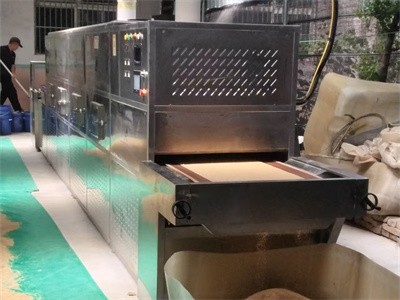
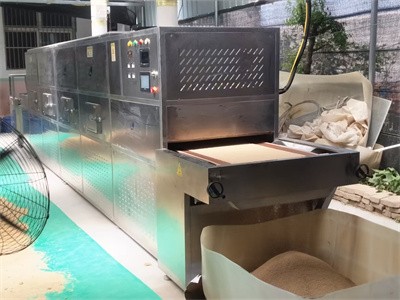
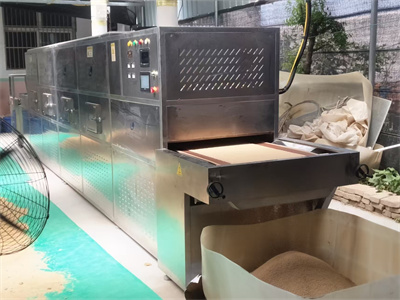
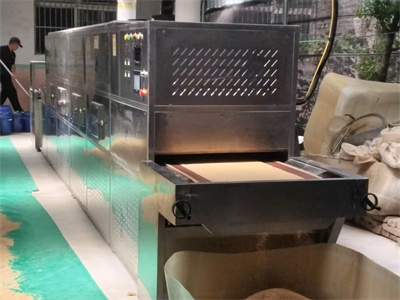
The microwave drying of fish feed pellets adopts a tunnel type continuous automated production line, which is sui...
About Production Shipment
For conventional customized equipment, we will complete the production in 7-15 days, the equipment could be shipped after your confirmation.
If available, it can be delivered directly.
Service commitment
After the arrival of the equipment, we will assign professional after-sales personnel to go to site for installation, guidance, commissioning, training, etc.
For those equipment cannot be installed on site, we will provide one-to-one video guidance for installation.
After sales service commitment
Within the agreed warranty period, all components of the equipment will be provided free of charge. Provide lifelong technical maintenance and repair services.
Tel:+86 53188965205
The microwave drying of fish feed pellets adopts a tunnel type continuous automated production line, which is suitable for processing puffed pellet feed. The entire assembly line operation can synchronously complete drying, sterilization, and solidification, solving the problems of traditional drying with external dryness and internal moisture, particle cracking, high pulverization rate, and short shelf life. The standardized and mass-produced process is the mainstream technology for improving the quality and efficiency of aquatic feed.
Fish feed pellets that have just been expanded and pelletized have a high moisture content, a soft texture, and are prone to adhesion and deformation. Firstly, perform a simple screening and sorting of wet particles to remove broken powder, residual particles, and agglomerated particles, ensuring that the incoming material is of uniform size and regular shape.
This step is the foundation for uniform drying, which can avoid uneven drying caused by mixing of small and large particles, burning of small particles, and trapping of large particles. At the same time, it can reduce the pulverization rate of subsequent drying and ensure the integrity of the finished feed product.
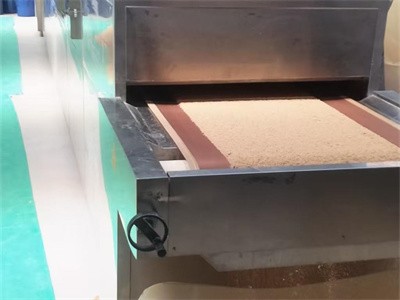
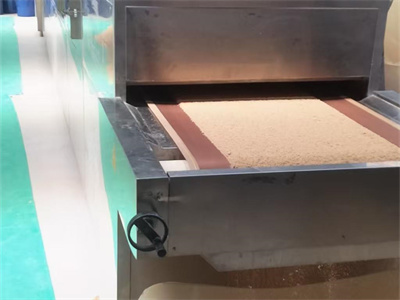
The sorted wet feed pellets are evenly spread on the food grade conveyor belt of the equipment through an automatic vibrating cloth machine. Control the thickness of the fabric evenly throughout the entire process, ensuring a smooth and even layout without any stacking or thickness differences.
Unlike the disorderly stacking of manually fed materials, automated fabrics can expose feed particles to microwave radiation, ensuring stable heating and dehydration conditions and ensuring uniform dryness of the entire batch of feed from the source.
The flattened feed particles enter the microwave drying chamber at a constant speed with the conveyor belt, and rely on the principle of microwave penetration type overall heating to achieve synchronous heating and dehydration inside and outside the particles.




 QQ
QQ