Drying of chemical raw materials has always been a meticulous process. Traditional hot air drying or steam drying transfer heat from the outside to the inside, with the surface layer being heated first. After the water evaporates, a layer of dry shell is left, which hinders the continued migration of internal water. Sometimes it is necessary to flip or extend the drying time, and it can also easily cause surface hardening, agglomeration, and even damage to material properties due to local overheating.
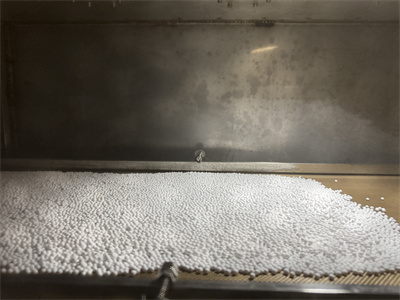
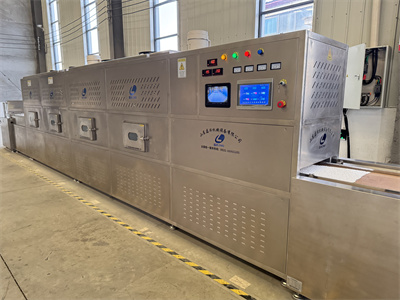
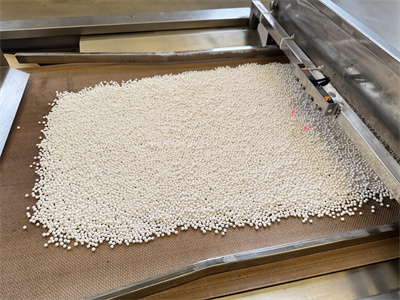
The tunnel type microwave dryer takes another path. It is a conveyor belt channel where materials are laid on the belt and pass through the microwave field at a constant speed. Microwaves do not heat the air, but directly act on the water molecules inside the material, causing them to rapidly oscillate and rub against each other, generating heat from within the material itself. In this way, water evaporates when heated from the inside out, and the direction of dehydration is consistent with the direction of heat generation, rather than forcing it from the outside in.
Due to the fact that microwaves can penetrate to a certain depth, the temperature difference between materials in the same layer is relatively small, and there will be no phenomenon of over drying near the heat source or getting wet far away, so the drying uniformity is better. Regardless of whether the material is in the form of flakes, spheres, or irregular particles, as long as it contains moisture, microwaves can act.
Moreover, microwave drying is completed in a relatively closed channel, without the dust and exhaust emissions caused by hot air, creating a clean working environment and reducing heating of the surrounding air.
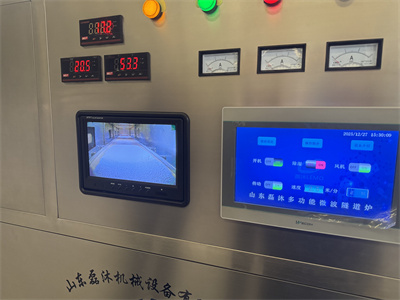
The operation of this equipment mainly relies on adjusting the speed of the conveyor belt. If the material has a high moisture content and is laid thick, the speed should be slowed down. If the moisture content is not high, the speed can be faster. It is not like an oven that can set the temperature, but indirectly controls the temperature through this method.
Overall, tunnel microwave drying provides a different option for drying chemical raw materials: allowing heat to be generated from the inside and naturally drying in the direction of water evaporation, thus preserving the original physical and chemical properties of the material as much as possible.




 QQ
QQ