The principle of microwave puffing food
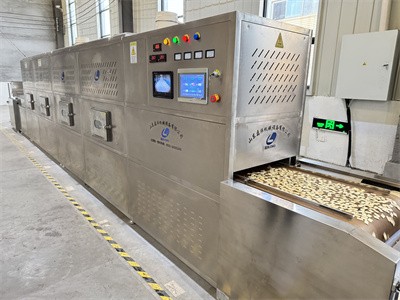
Friction between water molecules can quickly generate heat, which is not baked from the outside but generated int...
About Production Shipment
For conventional customized equipment, we will complete the production in 7-15 days, the equipment could be shipped after your confirmation.
If available, it can be delivered directly.
Service commitment
After the arrival of the equipment, we will assign professional after-sales personnel to go to site for installation, guidance, commissioning, training, etc.
For those equipment cannot be installed on site, we will provide one-to-one video guidance for installation.
After sales service commitment
Within the agreed warranty period, all components of the equipment will be provided free of charge. Provide lifelong technical maintenance and repair services.
Tel:+86 53188965205
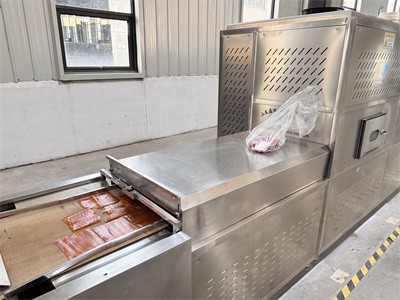
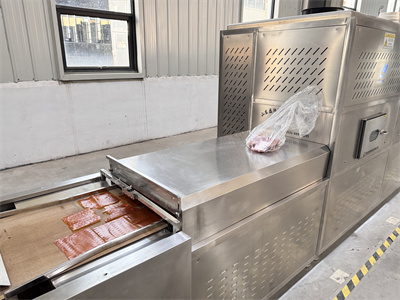
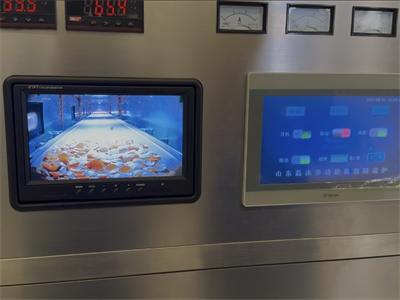
Friction between water molecules can quickly generate heat, which is not baked from the outside but generated internally within the food. In a short period of time, the internal temperature of the ingredients rapidly rises, and the moisture inside instantly turns into steam, creating a pressure inside the ingredients.
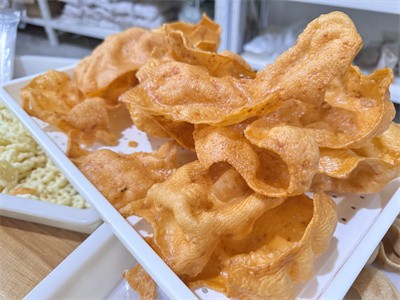
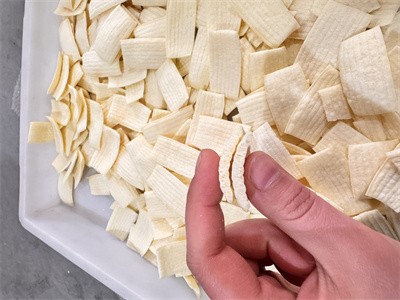
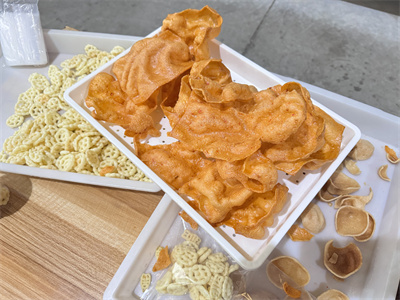
When the inside of the food is stretched open by water vapor, the internal structure becomes loose and porous, and this process is called puffing.
Summarize key points:
1. Microwave activates water in ingredients, generating heat through friction;
2. The internal moisture rapidly turns into water vapor, generating internal pressure;
3. Internal pressure supports the organization of food ingredients, forming a fluffy hollow structure;
4.After processing, the moisture quickly dissipates and forms a crispy and puffed texture.
Unlike regular frying and oven puffing, the oven heats the outside first, resulting in uneven puffing effect; Microwave heating both inside and outside, resulting in uniform expansion and fast speed. Ingredients such as millet, black beans, nuts, and mixed grain flour can all use this principle to achieve a slight puffing effect.




 QQ
QQ