Why is it necessary to spread the ingredients evenly in microwave baking?
Everyone should have experienced heating food in a microwave at home: when food is piled up, the middle part is
About Production Shipment
For conventional customized equipment, we will complete the production in 7-15 days, the equipment could be shipped after your confirmation.
If available, it can be delivered directly.
Service commitment
After the arrival of the equipment, we will assign professional after-sales personnel to go to site for installation, guidance, commissioning, training, etc.
For those equipment cannot be installed on site, we will provide one-to-one video guidance for installation.
After sales service commitment
Within the agreed warranty period, all components of the equipment will be provided free of charge. Provide lifelong technical maintenance and repair services.
Tel:+86 53188965205
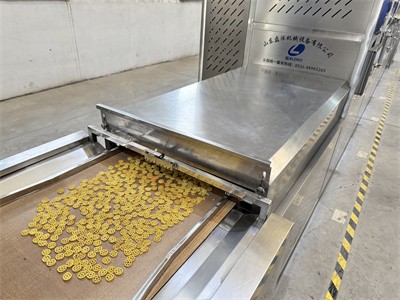
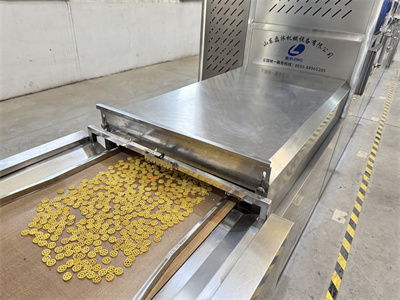
Everyone should have experienced heating food in a microwave at home: when food is piled up, the middle part is often heated quickly, but the edges are still cold; Spread it thinly and heat it evenly. In the microwave baking process of food factories, the same principle applies: the thickness of the material directly determines the quality of the finished product.
Microwave heating generates heat by absorbing energy from water molecules inside the material. If the thickness of the materials is uneven, or if a large amount of materials are stacked together, the microwave energy that can be absorbed by the stacking area will be concentrated and stacked. The thin layer of material absorbs limited microwaves and heats up smoothly; However, there are many materials in the pile, and a large amount of moisture absorbs microwaves at the same time. Heat continues to accumulate inside, and it is not easy for heat to dissipate. The temperature rise rate is much faster than in the diluted area.
The accumulation of heat at the stacking location can easily lead to local overheating, manifested as material burning. Many nuts and spices have encountered this situation during processing: the materials are piled up, the outer layer looks normal, the core position has been burnt and bitter, while the unfolded thin material has just reached the ideal maturity.
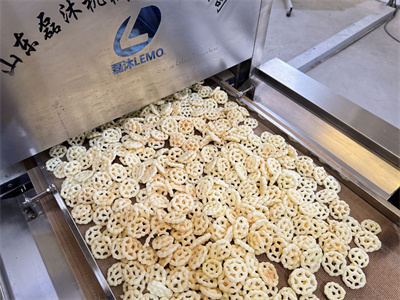
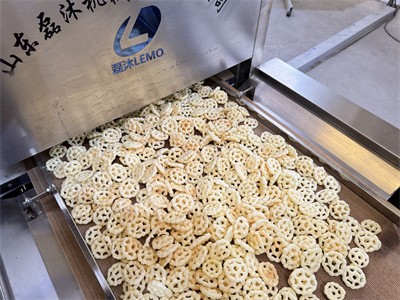
In addition, when materials are stacked together, the water vapor generated inside is difficult to dissipate in a timely manner. The water vapor trapped in the middle of the material layer will indirectly change the material's ability to absorb microwaves, further exacerbating local heating imbalances. Uniform thickness and spreading of materials can ensure that each material receives almost the same microwave energy, with similar heating rates. Dehydration and maturation are carried out simultaneously, resulting in uniform color and humidity of the finished product, reducing the occurrence of undercooked or partially burnt products.
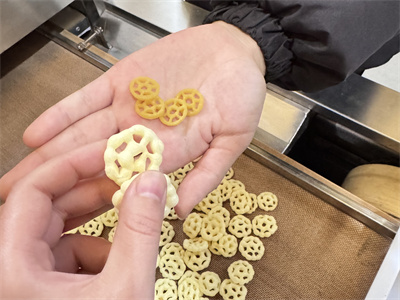
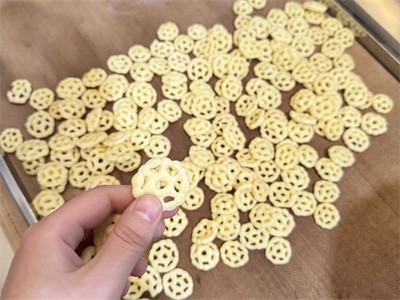
Of course, the thinner the material, the better. It is necessary to find the appropriate thickness based on the product characteristics. Reasonably controlling the thickness of the material and avoiding material accumulation is a simple and critical operation point in microwave food processing, which can stabilize the quality of the finished product and reduce raw material loss.




 QQ
QQ