What are the common ways to dry shrimp skin?
Shrimp skin is a common dried seafood in every household, which is indispensable for making soup, enhancing fresh...
About Production Shipment
For conventional customized equipment, we will complete the production in 7-15 days, the equipment could be shipped after your confirmation.
If available, it can be delivered directly.
Service commitment
After the arrival of the equipment, we will assign professional after-sales personnel to go to site for installation, guidance, commissioning, training, etc.
For those equipment cannot be installed on site, we will provide one-to-one video guidance for installation.
After sales service commitment
Within the agreed warranty period, all components of the equipment will be provided free of charge. Provide lifelong technical maintenance and repair services.
Tel:+86 53188965205
Shrimp skin is a common dried seafood in every household, which is indispensable for making soup, enhancing freshness, and mixing vegetables. High quality shrimp skin has a transparent color, rich freshness, is dry and does not regain moisture, and is not easily moldy or spoiled even after being stored for a long time; However, low-quality shrimp skin is prone to becoming soft, sticky, dark in color, and has a fishy smell. It can even become damp and spoil after being stored for a few days.
Many people don't know that the difference in quality of shrimp skin mostly comes from different drying processes in the later stage. At present, the mainstream methods for processing shrimp skin in aquatic processing plants are natural sun drying and hot air drying. Microwave drying and sterilization are upgraded processes for shrimp skin processing, and the finished product effects and production characteristics of each method differ significantly.
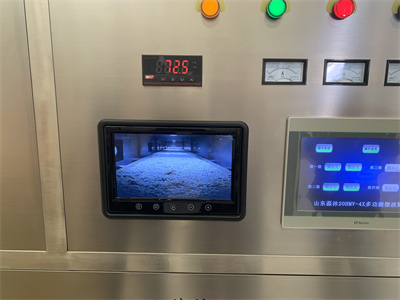
The most traditional and well-established way is natural air drying, which is also a model used by many small workshops. The advantages are zero equipment cost and simple operation, but the shortcomings are also quite prominent. We rely on the weather to make a living. It's impossible to work on rainy or humid days, and the drying cycle can last for several days. Moreover, open-air drying is prone to dust, mosquitoes, and impurities, and the hygiene conditions are poor. Long term exposure to sunlight can damage the natural astaxanthin in shrimp skin, causing it to turn white and yellow in color, and losing the freshness and aroma of seafood. At the same time, there are more bacterial colonies and insect eggs left, resulting in uneven dryness and wetness of the finished product, more debris, and significant loss.
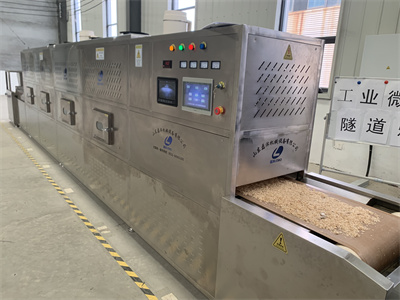
At present, small and medium-sized factories mostly use hot air drying rooms for drying, which belong to the heat transfer mode of external heating and internal cooling, and the heat slowly penetrates from the surface of the shrimp skin. Compared to sun exposure, it is stable and not affected by weather, and can be processed in batches with a relatively clean processing environment. Relying on circulating hot air to remove surface moisture from shrimp skin greatly improves efficiency and hygiene compared to outdoor drying.
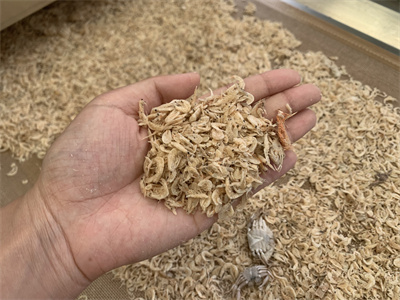
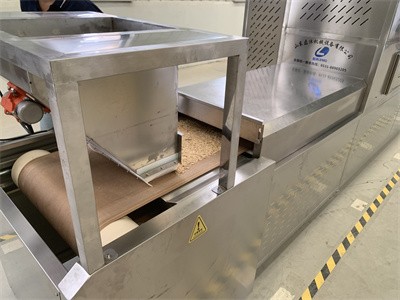
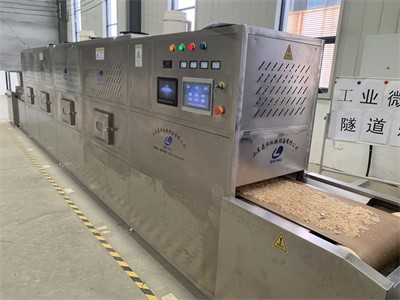
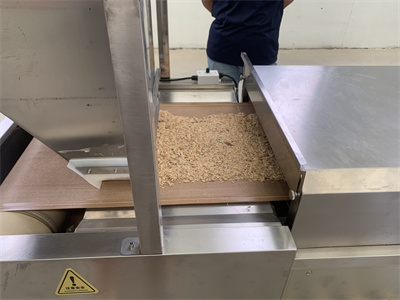
The microwave drying sterilization process breaks away from the limitations of traditional heat transfer drying, and does not require waiting for heat to transfer layer by layer. It can directly penetrate the shrimp skin body, achieving synchronous and uniform dehydration inside and outside. We have solved the common problems of external dryness and internal moisture, as well as residual hidden water in traditional crafts from the root. The dried and humid shrimp skin after processing is uniform, and the finished product is dry, loose, not hard, and not broken.
In addition, microwave has the effect of low-temperature sterilization and insect egg killing while dehydrating and drying. It can effectively eliminate bacteria, molds, and parasitic eggs hidden in shrimp skin without the need for additional preservatives. The entire processing process is clean and hygienic, eliminating secondary pollution.




 QQ
QQ