Microwave drying solves the problem of moldy chopsticks
Bamboo and wood chopsticks are mainstream tableware in daily life. The natural material comes with wooden pores, ...
About Production Shipment
For conventional customized equipment, we will complete the production in 7-15 days, the equipment could be shipped after your confirmation.
If available, it can be delivered directly.
Service commitment
After the arrival of the equipment, we will assign professional after-sales personnel to go to site for installation, guidance, commissioning, training, etc.
For those equipment cannot be installed on site, we will provide one-to-one video guidance for installation.
After sales service commitment
Within the agreed warranty period, all components of the equipment will be provided free of charge. Provide lifelong technical maintenance and repair services.
Tel:+86 53188965205
Bamboo and wood chopsticks are mainstream tableware in daily life. The natural material comes with wooden pores, which can easily leave hidden moisture, mold spores, and insect eggs inside. Traditional hot air drying and natural air drying are both surface heat conduction drying methods, which can effectively dry the surface moisture of chopsticks. However, the moisture in the core layer is difficult to completely discharge, resulting in the problem of external dryness and internal moisture. During the storage and use of chopsticks, residual moisture inside continues to precipitate, which can easily lead to the growth of mold, blackening, mold growth, and odor, making it one of the pain points in the processing of bamboo and wooden tableware.
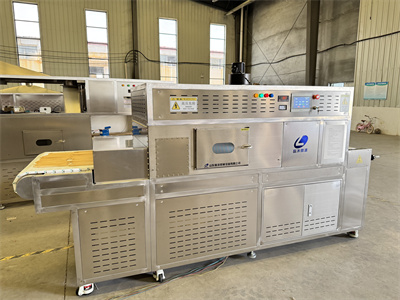
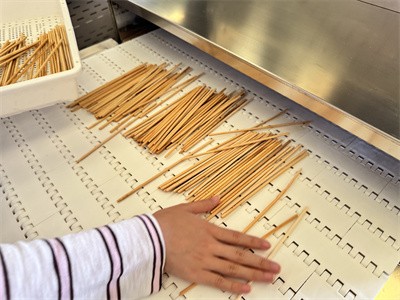
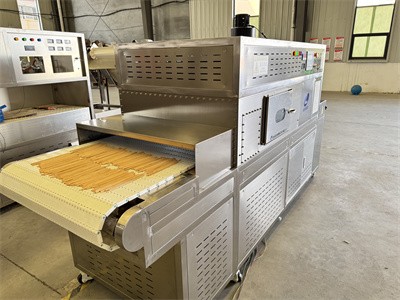
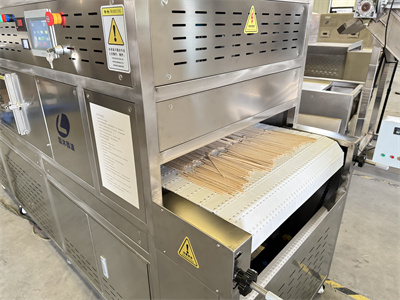
The microwave drying and sterilization equipment is very suitable for the processing characteristics of bamboo and wood chopsticks. Its advantage is the penetrating internal and external synchronous drying, deep dehydration and sterilization, which eliminates the hidden danger of mold. Different from the traditional heating mode from the outside to the inside, microwave has extremely strong material penetration and can directly act on the internal structure of bamboo and wood chopsticks, causing water molecules in the surface, middle, and core layers of the chopsticks to vibrate at high frequency to produce heat and evaporate quickly.
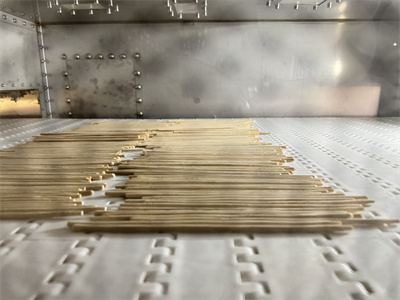
The entire drying process does not require thermal conduction transition, and the chopsticks are uniformly heated and have a uniform moisture content, solving the industry problem of external dryness and internal moisture retention. At the same time as deep dehydration, microwave can effectively kill mold, bacteria, and insect eggs hidden in the gaps and internal pores of bamboo and wood fibers, achieving integrated processing of drying, sterilization, and mold prevention without the need for secondary treatment.
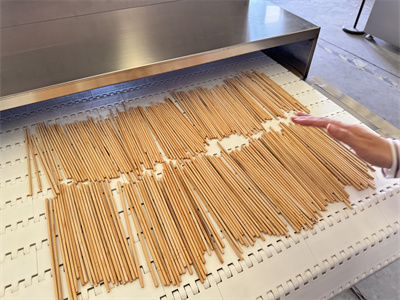
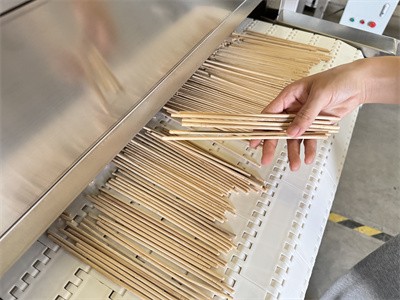
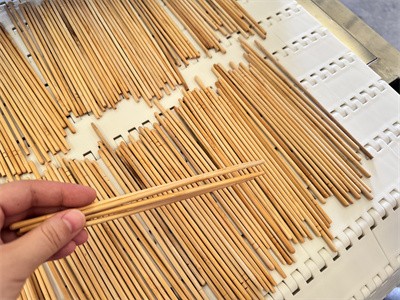
Bamboo and wood chopsticks processed by microwave equipment are completely dehydrated, evenly dried and wet, with no residual moisture inside, cutting off the conditions for mold growth and greatly extending storage and service life. At the same time, the entire processing process is low-temperature and gentle, without damaging the structure of bamboo and wood materials. The finished chopsticks have a natural color, no cracking, no deformation, and no odor, retaining the original texture of bamboo and wood.
In addition, the equipment is suitable for continuous operation on the assembly line, with high processing efficiency and stable product quality. It does not require chemical anti mold agents to assist, and pure physical processing is safe and healthy. It meets the production standards of tableware and food grade, and is currently the preferred process for anti mold, sterilization, quality improvement and efficiency enhancement of bamboo and wood chopsticks.




 QQ
QQ