How does microwave sterilize food?
There are many ready to eat fast food, braised cooked food, and various spices on the market. If you want to ...
About Production Shipment
For conventional customized equipment, we will complete the production in 7-15 days, the equipment could be shipped after your confirmation.
If available, it can be delivered directly.
Service commitment
After the arrival of the equipment, we will assign professional after-sales personnel to go to site for installation, guidance, commissioning, training, etc.
For those equipment cannot be installed on site, we will provide one-to-one video guidance for installation.
After sales service commitment
Within the agreed warranty period, all components of the equipment will be provided free of charge. Provide lifelong technical maintenance and repair services.
Tel:+86 53188965205
There are many ready to eat fast food, braised cooked food, and various spices on the market. If you want to avoid using a large amount of preservatives and not spoil during the shelf life, the sterilization process is particularly crucial. At this point, many people become curious about the principle of industrial microwave tunnel ovens, which are similar to household microwave ovens. So, what does it rely on to achieve food sterilization?
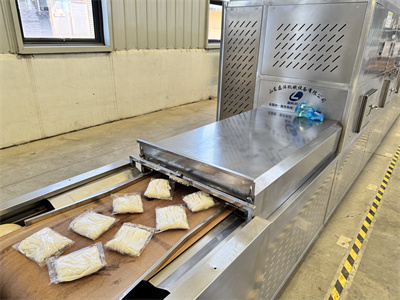
Microwave sterilization involves the combined effects of thermal and non thermal biological effects. Microwaves can penetrate materials, and water molecules inside food rapidly vibrate and rub in the microwave field, generating heat on their own, which belongs to the internal heat generation of the material, not the gradual heat transfer from the outside. Microorganisms also contain a large amount of water in their bodies, and a rapid increase in temperature can directly damage the protein structure of bacteria and molds, causing the bacterial cells to lose activity. This is the thermal effect of microwave sterilization.
In addition, there are non thermal effects. Under the action of microwave electromagnetic fields, the cell membrane and genetic material of microbial cells will be disturbed, and the normal metabolism of cells will be disrupted. It is not necessary to reach the same high temperature as traditional sterilization to suppress microbial growth and achieve sterilization through a dual approach.
Compared to traditional steaming and water bath sterilization, microwave is a whole penetration heating method that synchronously heats up the inside and outside of the material, avoiding situations where the surface has already overheated and the center has not yet reached the sterilization conditions. Materials with uneven thickness, such as braised pork slices and spice powder, can also reduce local overheating and preserve their original aroma, color, and taste.
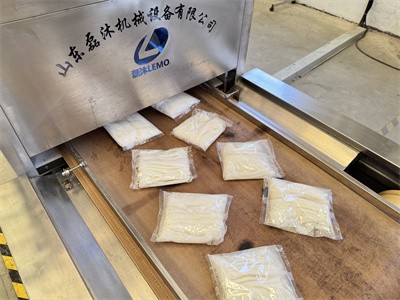
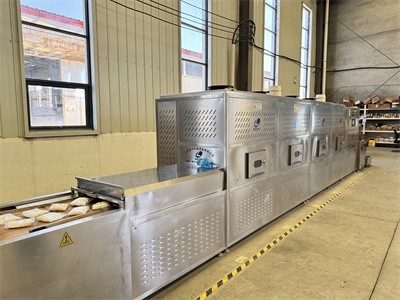
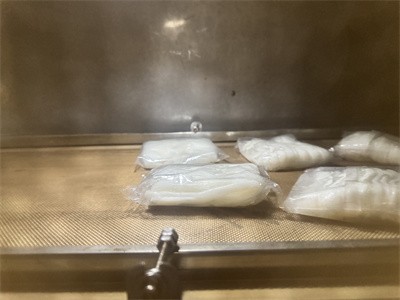
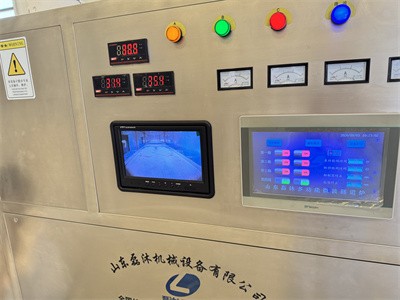
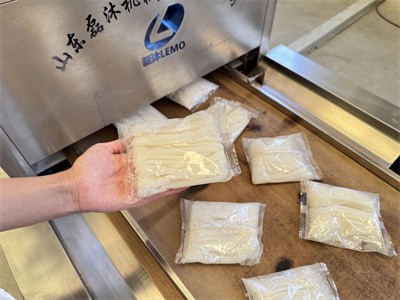
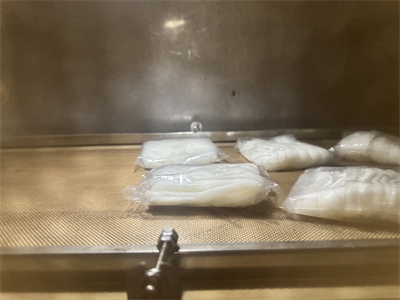
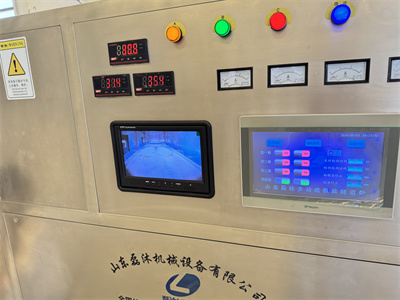
In continuous production, materials are evenly spread on the conveyor belt and pass through the microwave area at a constant speed. By adjusting the conveyor belt speed and microwave output power, the heating degree of the materials is controlled to adapt to different product categories. Thinner spices have a shorter processing time, while thicker braised ingredients can have their residence time in the microwave range appropriately extended to achieve stable sterilization.
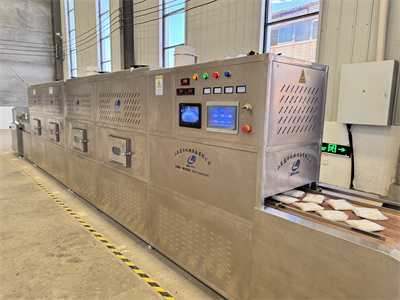
However, microwave sterilization also has a scope of application. The thickness and moisture of the material should be controlled reasonably, and the material should be evenly spread to achieve the ideal sterilization effect. This process is suitable for ready to eat small package braised foods, spices, fast food ingredients, and other products. While reducing the number of microorganisms, it effectively locks in the original flavor of the ingredients and reduces the problem of poor taste caused by prolonged high temperatures.




 QQ
QQ