Microwave assisted Green Tea Processing
Many friends who love green tea are curious about the role of withering in the tea making process Freshly pick
About Production Shipment
For conventional customized equipment, we will complete the production in 7-15 days, the equipment could be shipped after your confirmation.
If available, it can be delivered directly.
Service commitment
After the arrival of the equipment, we will assign professional after-sales personnel to go to site for installation, guidance, commissioning, training, etc.
For those equipment cannot be installed on site, we will provide one-to-one video guidance for installation.
After sales service commitment
Within the agreed warranty period, all components of the equipment will be provided free of charge. Provide lifelong technical maintenance and repair services.
Tel:+86 53188965205
Many friends who love green tea are curious about the role of withering in the tea making process. Freshly picked green tea leaves have a hidden quality issue. The leaves contain active oxidase, which acts as a color changing factor. As long as the tea leaves are damaged or exposed to air, this enzyme will catalyze the oxidation reaction of tea polyphenols, causing the green tea leaves to gradually turn reddish brown. If not processed in a timely manner, green tea will ferment and turn red, losing its unique clear soup and green leaf characteristics.
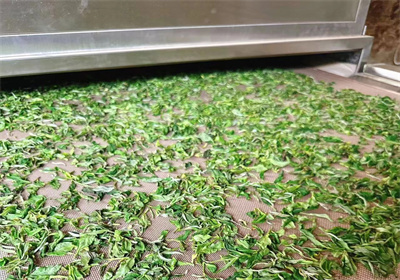
Closing the shoot is the core process to solve this problem. Relying on high temperature to rapidly inactivate the activity of oxidase, the oxidation browning process of tea is terminated, locking in the original emerald green color of tea. At the same time, high temperature can evaporate the green and astringent grass flavor inherent in fresh leaves, stimulate the natural aromatic substances inside the tea leaves, remove the green aroma, form a fresh tea fragrance, and evaporate some of the water in the leaves, making the fresh leaves soft and convenient for subsequent rolling and shaping, laying the foundation for the quality of green tea.
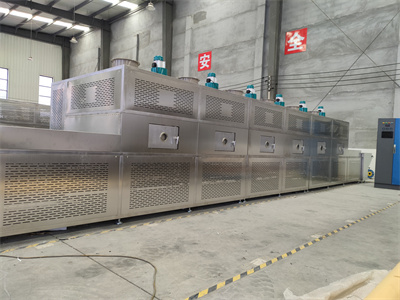
Traditional iron pot frying relies on heat conduction heating, and the heat is slowly transferred from the surface of the iron pot to the inside of the tea leaves. The surface of the tea leaves is heated first, and the center of the leaves heats up slowly. Improper control can easily lead to external roasting and insufficient internal withering. The heating logic of microwave sterilization is completely different, and the principle is similar to that of heating food in a household microwave oven. High frequency microwaves can penetrate the entire tea leaf and directly reach the internal structure of the leaf, causing water molecules in the tea cells to vibrate at high speed, rub and collide with each other in the electromagnetic field, and generate heat autonomously inside the tea, achieving synchronous heating and warming of the tea surface and interior.
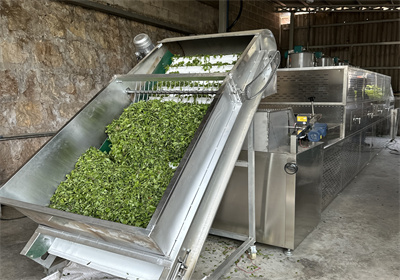
This mode of heating both inside and outside does not have a time difference in heat conduction layer by layer. The entire fresh leaf is heated evenly, which can instantly inactivate the oxidase in the leaf, evenly kill the green leaves, and preserve the bright and green color of the tea leaves as much as possible, avoiding local redness. The heating process is smooth and controllable, the green grass flavor evaporates fully, and the original fragrant substances of tea are not easily destroyed by high temperature, resulting in a natural and pure aroma of the finished tea.
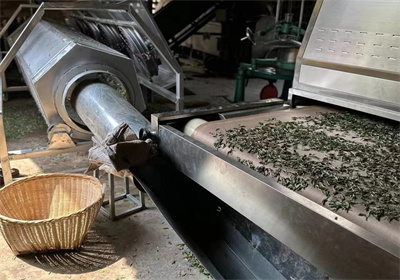
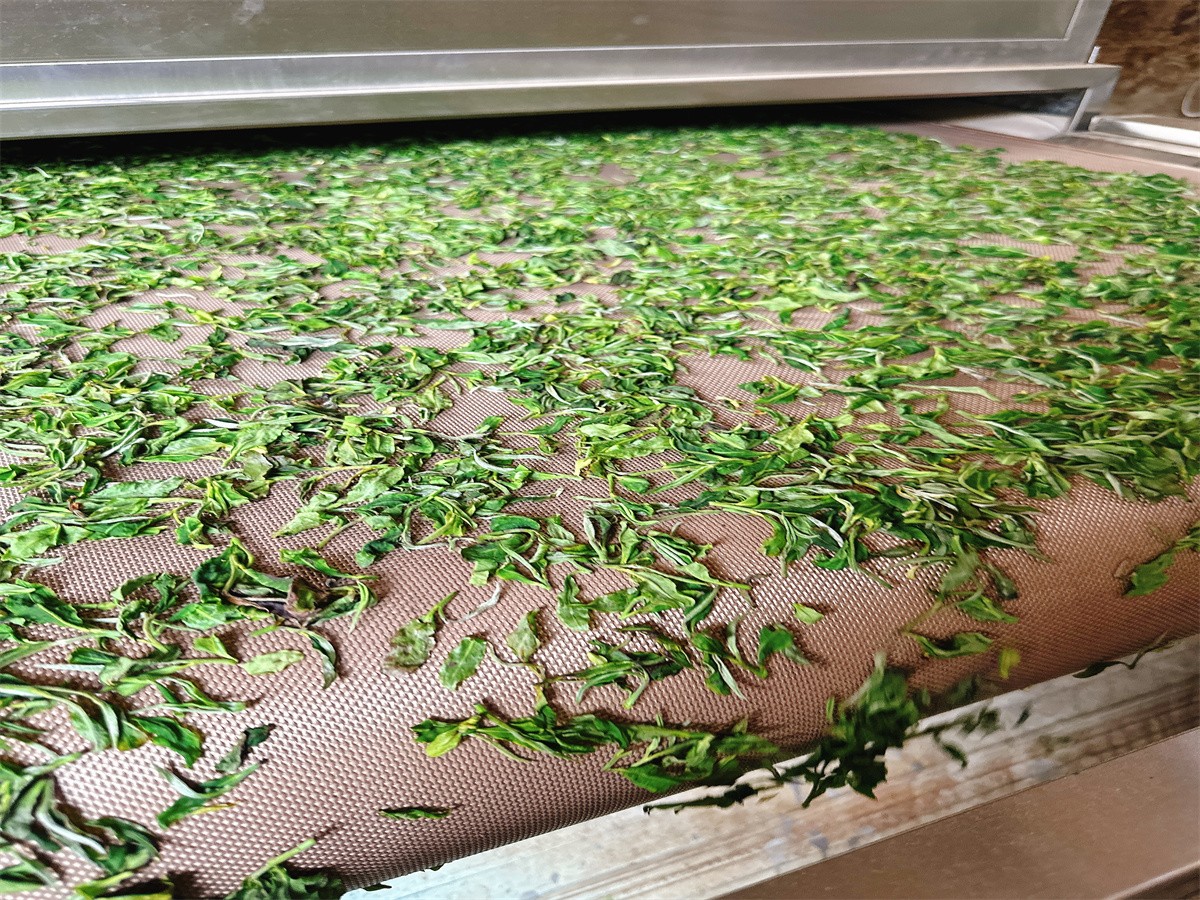
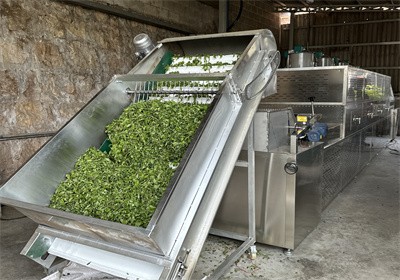
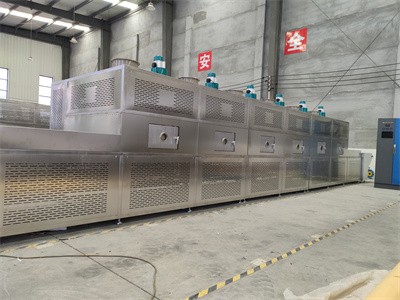
In industrial tea processing, conveyor belt type microwave withering equipment can achieve continuous processing of fresh leaves without the need for frequent manual frying. This not only avoids the disadvantages of uneven heating in manual tea frying, but also improves tea making efficiency, taking into account the color, aroma, and appearance of green tea. Nowadays, it has become a commonly used process for many tea processing factories to produce high-quality green tea.




 QQ
QQ