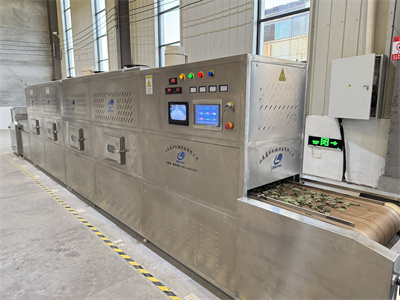
Microwave drying of leaf feed achieves stable supply
Various natural leaf resources are abundant, low-cost, and rich in dietary fiber, vitamins, and minerals, making i...
About Production Shipment
For conventional customized equipment, we will complete the production in 7-15 days, the equipment could be shipped after your confirmation.
If available, it can be delivered directly.
Service commitment
After the arrival of the equipment, we will assign professional after-sales personnel to go to site for installation, guidance, commissioning, training, etc.
For those equipment cannot be installed on site, we will provide one-to-one video guidance for installation.
After sales service commitment
Within the agreed warranty period, all components of the equipment will be provided free of charge. Provide lifelong technical maintenance and repair services.
Tel:+86 53188965205
Various natural leaf resources are abundant, low-cost, and rich in dietary fiber, vitamins, and minerals, making it an excellent natural green feed for livestock, poultry, and pets. However, fresh leaves have high moisture content, are not durable for storage, and have strong seasonality. They are prone to mold and decay, as well as the growth of bacteria and insect eggs, making it difficult to store them for a long time. In autumn and winter, there is often a shortage of green feed.
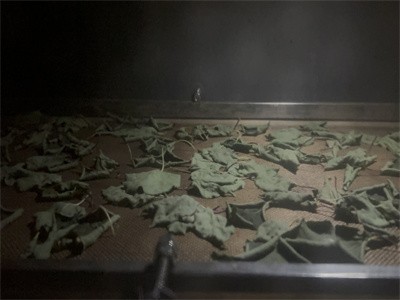
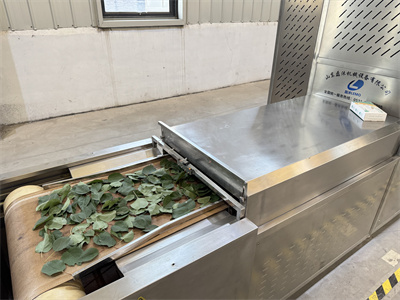
The traditional drying method heavily relies on weather, with uneven drying, high impurities, poor hygiene, and easy contamination of dust and mold during the drying process. It has a short storage period, high losses, and cannot form stable feed resources. Microwave drying technology enables ordinary tree leaves to achieve dry purification, standardization, and long-term storage, making it a very practical green processing method for animal feed.
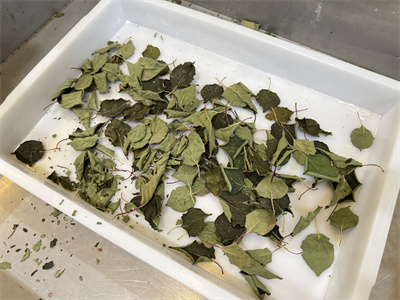
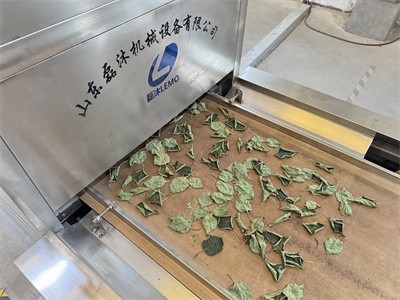
The advantage of microwave is that drying, sterilization, and egg removal are completed simultaneously. Microwaves penetrate the interior of leaves to achieve uniform dehydration, while utilizing physical and biological effects to kill bacteria, molds, and insect eggs on the surface of leaves and in fiber gaps. The entire process is purely physical, without adding any chemicals, with no residue or pollution. The treated leaves are clean, dry, and have significantly improved hygiene indicators, reducing animal gastrointestinal diseases and feeding risks from the source.
Compared to sun exposure and high-temperature drying, microwave belongs to short-term low-temperature dehydration, which can effectively preserve the natural nutrition, original color, and fragrant grass flavor of leaves, with less nutrient loss, good palatability, and excellent animal feeding effect.
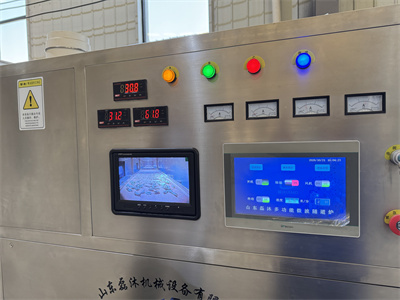
More importantly, microwave drying has uniform and controllable moisture content, stable drying and wetting of leaves, and can be stored for a long time. Farmers can harvest, process and store leaves in bulk during the peak season of spring and summer, freeing themselves from seasonal restrictions and achieving a stable supply of natural green feed throughout the year, reducing the cost of breeding feed and minimizing feed loss.
Overall, microwave drying has transformed leaves that were originally perishable and seasonal into clean, safe, nutritionally stable, and high-quality natural animal feed that can be stored for a long time. It is a low-cost, high-efficiency, and resource efficient process in the aquaculture industry.




 QQ