Analyze the reasons for uneven microwave drying of leaves
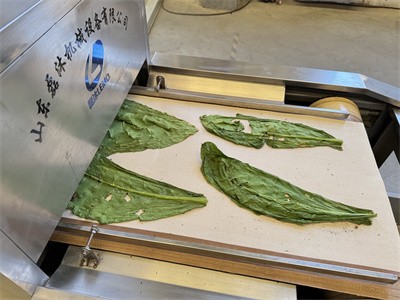
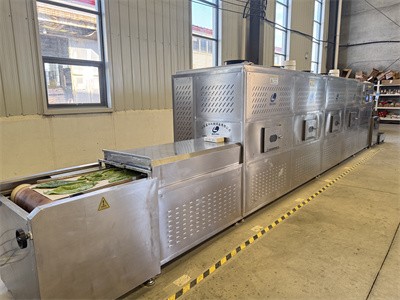
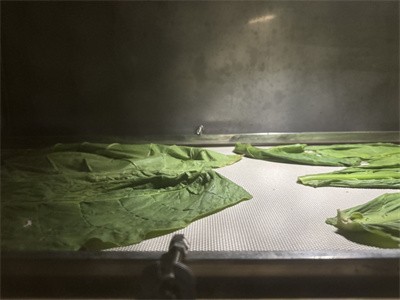
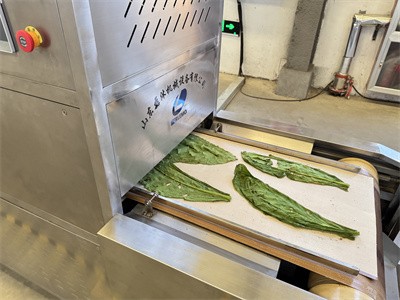
Leaves like the one in the picture may experience uneven microwave drying and localized burning at the stem leaf...
About Production Shipment
For conventional customized equipment, we will complete the production in 7-15 days, the equipment could be shipped after your confirmation.
If available, it can be delivered directly.
Service commitment
After the arrival of the equipment, we will assign professional after-sales personnel to go to site for installation, guidance, commissioning, training, etc.
For those equipment cannot be installed on site, we will provide one-to-one video guidance for installation.
After sales service commitment
Within the agreed warranty period, all components of the equipment will be provided free of charge. Provide lifelong technical maintenance and repair services.
Tel:+86 53188965205
Leaves like the one in the picture may experience uneven microwave drying and localized burning at the stem leaf junction, which is due to the differentiated structure of the leaves themselves and the conflicting characteristics of microwave selective heating.
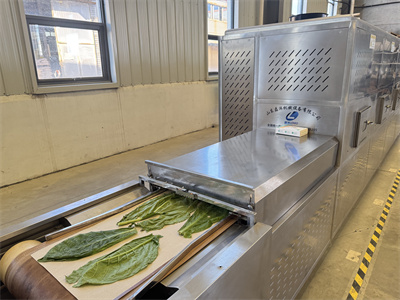
From the perspective of the structure of the leaves themselves, this type of leaf is a typical differentiation structure of thickness and thinness: the mesophyll part is light, thin, and stretched, with a small thickness and low water content; The main leaf vein in the middle, especially the position where the leaf blade and petiole are connected, has dense and thick fibers, and a much higher moisture content than the surrounding mesophyll. On a single leaf, there are two types of tissues with huge differences in density, water storage capacity, and air permeability. The fibers inside the leaf veins are tightly arranged, and the channels for water vapor to penetrate outward are narrow. The resistance to water discharge is much greater than that of loose thin leaf flesh.
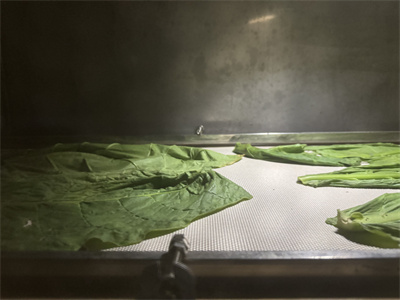
The heating characteristic of microwave is to preferentially allow water molecules to absorb electromagnetic energy, which belongs to the selective internal heating of "the more water content, the more intense the heat absorption". When tobacco leaves are laid flat and enter the equipment, the thin leaf flesh has less moisture and will quickly dehydrate first; After water loss, the ability of leaf flesh to absorb microwaves rapidly decreases. The thicker main veins and stem leaf junctions have a higher water content and continuously absorb a large amount of microwave energy, causing heat to accumulate at this point.
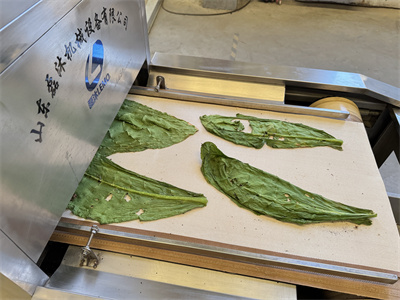
At this point, an irreconcilable technological contradiction arises: if sufficient power and duration are set to dry the moisture inside the thick leaf veins to meet the standard, the leaf flesh will already lose free water at a very early stage. After lacking water molecules as heat absorbing carriers, the coarse fibers and inorganic salts in the leaf veins and mesophyll will continue to absorb microwave energy, and the temperature will rise rapidly uncontrollably. The junction between the stem and leaf will first overheat, carbonize, and burn; If the power is reduced, the heating time is shortened, and the thin leaf meat is protected from being roasted, the moisture inside the thick leaf veins cannot be fully discharged, resulting in a situation where the surface is dry and the core is moist, and ultimately the uniformity of the entire batch drying does not meet the standard.
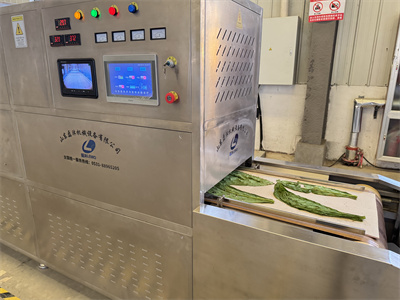
Even if the leaves are neatly laid out, the huge differences in thickness and moisture content of the same material will amplify the fluctuations in energy distribution within the microwave field. The stem leaf junction naturally becomes a heat rich area, making it difficult to solely rely on microwave parameters to simultaneously meet the drying needs of leaf flesh and main veins.




 QQ