The processing of melon seeds is divided into two techniques: traditional frying pan, drum baking, and microwave baking. Why is this distinction made?
Because many processing practitioners will find obvious differences: the whole process of baking melon seeds in a drum or frying pan requires continuous stir frying, while microwave equipment does not require flipping the materials during the entire baking process. The core difference between the two process operations lies in the completely different heating methods.
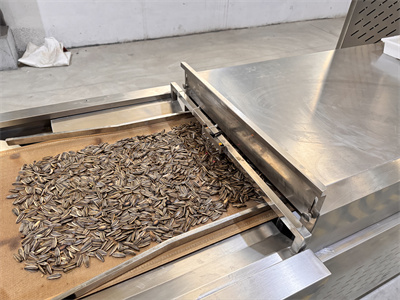
Traditional wok and drum rely on heat conduction and radiation heating. The heat source is concentrated on the pot wall and the outer wall of the drum, and the heat can only first contact the surface of the melon seeds and then slowly penetrate inward. If not continuously stir fried, the bottom layer of melon seeds will quickly burn when they are tightly attached to the high-temperature tube wall, and the upper layer of melon seeds will not be exposed to heat for a long time, resulting in half life and uneven dryness and wetness. At the same time, the shells of melon seeds vary in thickness and are stacked together, so heat cannot naturally penetrate the layers. Only by constantly flipping can melon seeds alternately come into contact with high-temperature heat sources, thereby evenly heating and avoiding local burning and undercooking. Stir frying is a necessary operation to compensate for the shortcomings of traditional single-sided heating.
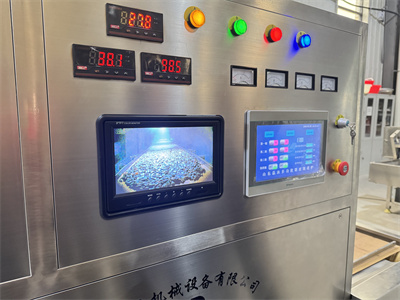
The microwave baking equipment adopts a through type integral heating, fundamentally eliminating the need for stir frying. This is because microwave electromagnetic waves can directly penetrate the entire layer of melon seeds, exciting high-speed vibration and friction of water and oil molecules inside the seeds. Heat can be generated both inside and outside the material, without the problem of "external heat and internal cold". As long as the melon seeds are laid flat and stacked, they can evenly receive microwave energy, and the heating rate of the surface and interior is basically the same, without local high-temperature burning phenomenon, naturally without the need for manual or mechanical flipping.
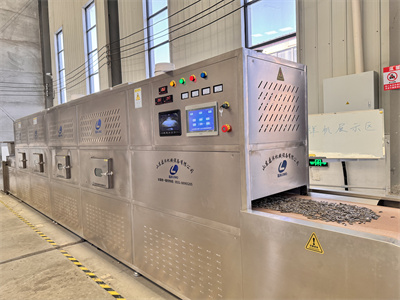
In addition, continuous stir frying can bring additional drawbacks. During the flipping process of the drum and wok, melon seeds collide and rub against each other, which can easily cause the outer shell to break and peel off, reducing the appearance of the finished product. Microwave static processing ensures smooth placement of melon seeds on the conveyor belt without any squeezing or collision, resulting in higher integrity of the finished shell.
The microwave low-temperature short-term heating mode ensures uniform heating and eliminates the need for stir frying, simplifying the production line and saving labor costs, while also reducing damage and loss of melon seeds. By comparison, stir frying is a remedy for traditional surface heating techniques, while the technical characteristics of microwave uniform heating directly eliminate this step, balancing processing efficiency and product quality, making it suitable for large-scale continuous processing of melon seeds.




 QQ
QQ