When it comes to microwaves, the first thing that comes to mind is the microwave at home. You don't need to preheat the food before cooking, it can heat up in just a few minutes. But the principle of industrial microwave tunnel ovens is similar to that of household microwave ovens, but the usage rules are different. Many people may wonder: does it need preheating? Why do we have to turn off the microwave when there are no materials in? In fact, all of this is based on simple physics knowledge, without complex technical barriers.
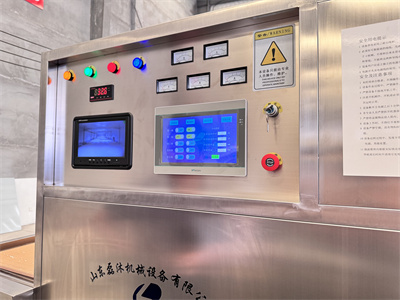
Firstly, do microwave tunnel ovens require preheating. The answer is clear: during normal production operations, there is no need to preheat for a long time like traditional ovens and hot air stoves. Household microwave ovens rely on electromagnetic waves to directly generate heat through high-speed friction of water molecules in food. The heat is generated from the inside of the material, rather than external heating; The same working logic applies to industrial microwave tunnel ovens, where the heating object is the material entering the oven, and the heat mainly comes from the water molecules of the material itself, rather than the oven body itself.
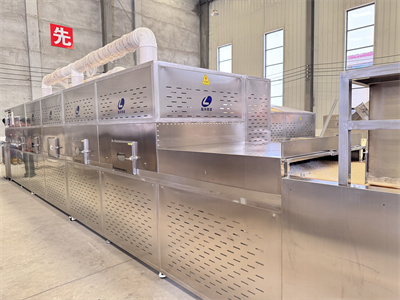
As soon as the material enters the tunnel furnace, the microwave can immediately act on the material, instantly exciting water molecules to heat up, without the need to heat the furnace chamber to a specific temperature first. However, there is a special case where if the ambient temperature is extremely low, or if there is slight moisture in the furnace chamber or conveying equipment just after starting up, a short period of no-load operation for more than ten seconds can remove the moisture. This is not a true preheating and is completely different from traditional equipment preheating for more than half an hour.
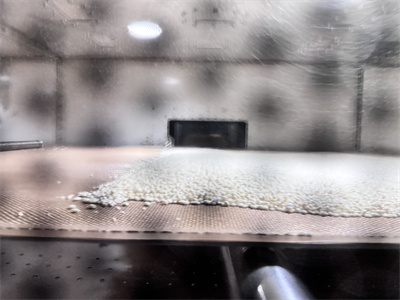
When there is no material entering, it is crucial to turn off the microwave, mainly for equipment safety and energy conservation. The microwave of the microwave tunnel oven is directionally emitted. Normally, when there is material, the microwave energy will be completely absorbed by the water molecules in the material and converted into heat energy. Once there is nothing inside the furnace and there is no object to absorb microwave energy, it will reflect back and forth inside the furnace cavity, constantly hitting the core components such as the microwave generator and magnetron of the furnace body.




 QQ
QQ