The raw millet is compact in texture, light in flavor, weak in aroma and hard in taste in its original state without processing, so it is difficult to directly use it for deep processing products such as meal substitute, coarse grain Congee, puffed complementary food, etc. Relying on microwave equipment to bake and ripen raw millet can not only fully stimulate the rich rice aroma of the grains themselves, but also allow the millet particles to form a natural and slight puffing effect, improving the processing quality of millet from multiple dimensions such as flavor, taste, and quality. It is a process suitable for modern deep processing of miscellaneous grains.
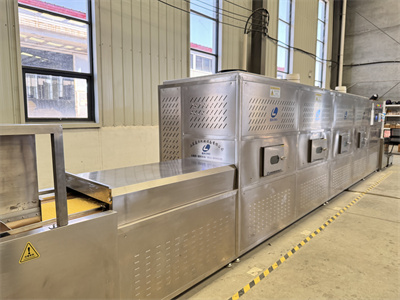
Traditional millet baking uses external heat conduction heating, and the heat slowly penetrates from the surface to the inside. This not only takes a long time to process, but also easily leads to problems such as external coke generation and uneven aging. At the same time, prolonged baking at high temperatures can damage the natural aroma of Xiaomi, resulting in a dry and hard taste with no fluffy texture.
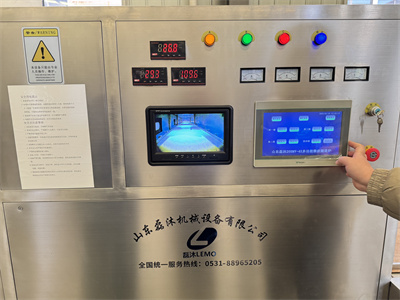
Microwave aging relies on the unique principle of internal heat generation, which can penetrate the interior of millet particles, allowing water molecules to oscillate and rub at high speed under high-frequency electromagnetic fields, achieving uniform heating inside and outside, breaking the limitations of traditional heating processes. During the maturation process, the gentle microwave baking environment can effectively activate the grain aroma substances inside the millet, eliminate the green and astringent taste of raw grains, lock in the pure and mellow natural rice aroma, and create a rich aroma.
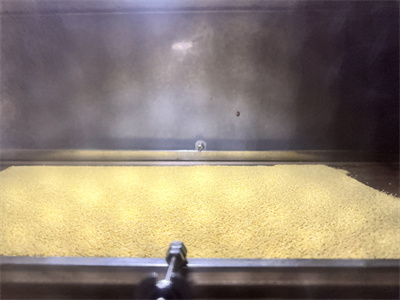
At the same time, the rapid heating inside the Xiaomi particles will create a small pressure difference, causing the particles to produce uniform and subtle puffing deformation. This mild puffing will not destroy the complete particle shape of Xiaomi, only making the internal structure loose and transparent.
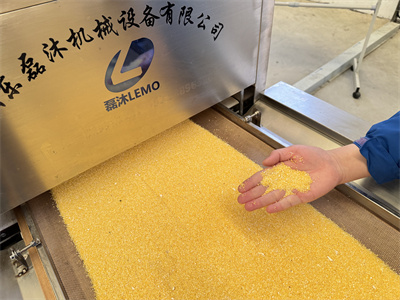
The matured millet processed by microwave has a natural and bright color, pure rice aroma, loose particles, and a soft and smooth texture when tasted. In addition, this process can also preserve the nutritional components such as dietary fiber and trace elements of millet as much as possible throughout the process, while simultaneously achieving bactericidal and insecticidal effects, extending the shelf life of finished products, and adapting to continuous production on assembly lines. It is a preferred process for processing miscellaneous grains.




 QQ
QQ