When baking peanuts at home, you may have noticed that peeled peanuts ripen faster, while shelled peanuts often take longer. In industrial microwave baking production, there is also a difference in the time between the two.
A hard peanut shell on the outside of a shelled peanut serves as a natural protective layer. Although microwaves have the ability to penetrate, peanut shells absorb a small amount of microwave energy, delaying the transfer of heat to the internal kernels. At the same time, there is an air gap between the shell and the peanut kernels, which has poor thermal conductivity and slows down the heating rate of the internal kernels. To achieve the desired degree of ripening for the nuts, not only does it require a longer heating time, but the internal moisture of the material also needs to be fully migrated and evaporated, resulting in a longer overall baking cycle.
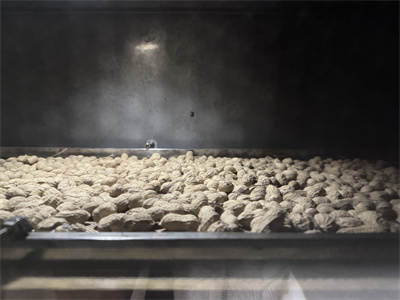
However, peanuts without their outer shells have no barrier, and microwave energy can directly act on the moisture inside the peanut kernels. The overall temperature of the material rises rapidly, the moisture evaporates faster, and the ripening speed is significantly faster. Under the same thickness of bedding conditions, the baking time required for peanuts is much shorter than that for peanuts with shells.
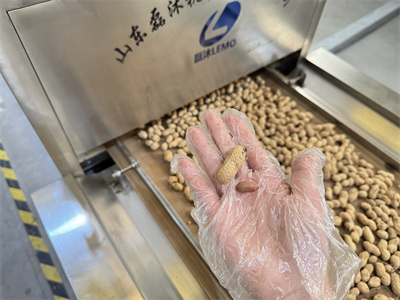
In actual production, in addition to the influence of the shell, the thickness of the material and the initial moisture content will also change the baking speed. The peanut particles with shells are larger, and the gaps between the material layers are larger when arranged, resulting in a longer overall water evaporation path; Peanuts have small particles, and their heat dissipation and water vapor discharge conditions after accumulation are different from those of shelled peanuts.
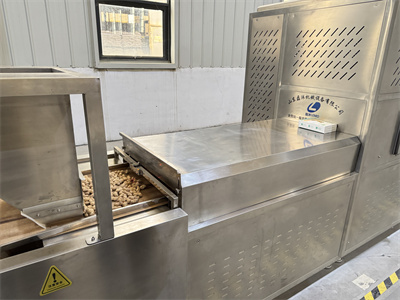
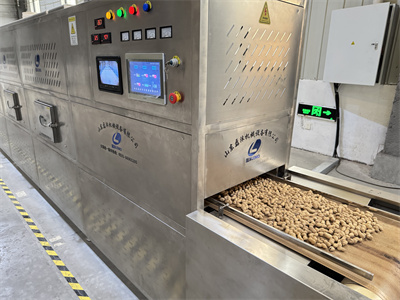
So when roasting shelled peanuts and peanuts, it is necessary to adjust the appropriate process parameters, flexibly control the time, and prevent burning.




 QQ