The difference between soaked and dried black beans after microwave baking
Black beans are a very common raw material in the processing of miscellaneous grains Many processing plants choo
About Production Shipment
For conventional customized equipment, we will complete the production in 7-15 days, the equipment could be shipped after your confirmation.
If available, it can be delivered directly.
Service commitment
After the arrival of the equipment, we will assign professional after-sales personnel to go to site for installation, guidance, commissioning, training, etc.
For those equipment cannot be installed on site, we will provide one-to-one video guidance for installation.
After sales service commitment
Within the agreed warranty period, all components of the equipment will be provided free of charge. Provide lifelong technical maintenance and repair services.
Tel:+86 53188965205
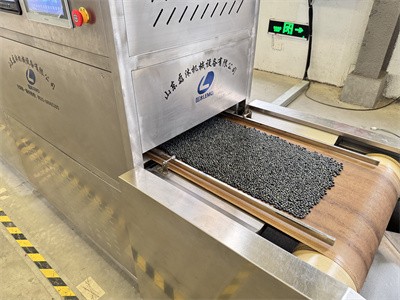
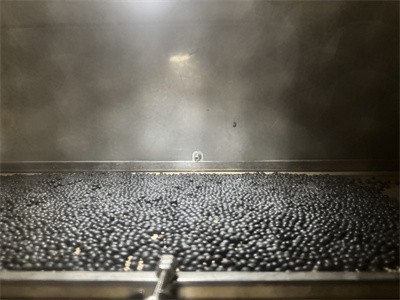
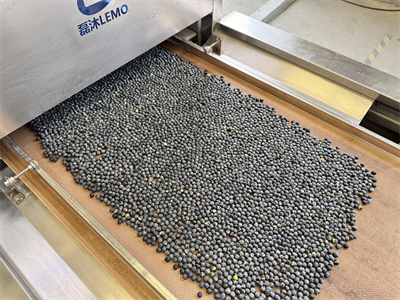
Black beans are a very common raw material in the processing of miscellaneous grains. Many processing plants choose to directly bake and dry black beans or soak them in clean water before sending them to a microwave tunnel for maturation treatment according to the needs of the finished product. The two processing methods rely on the same microwave equipment, and the final product has significant differences in appearance, entrance taste, and applicable scenarios.
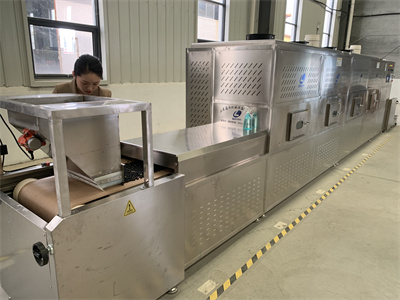
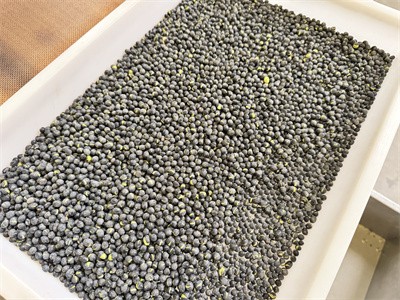
From the appearance, the dry black beans that have not been soaked after baking have a compact overall shape, with the skin shrinking and tight, presenting a uniform dark black color. Some beans may slightly crack when heated, with small cracks and intact particles that are not easily broken. When held in the hand, the texture is hard and the weight is solid. After thorough soaking and microwave baking, the black beans swell after absorbing water. After baking, the beans become noticeably larger in size, and the skin is soft and easy to peel off. The cracking amplitude is greater during baking, and the internal flesh is fully stretched, giving the overall appearance full and fluffy. A gentle pinch of the skin will cause it to peel off.
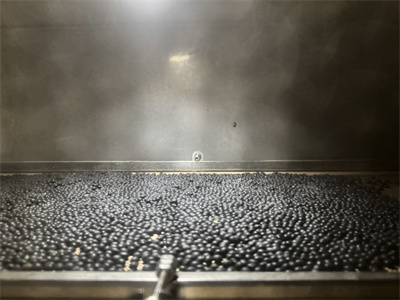
The taste difference between the two types of black beans is very prominent. Dried black beans are directly microwave matured, with a tight and crisp texture. When chewed, the bean aroma is rich and solid, and the moisture content is low. After soaking, the internal tissue of black beans is softened by water, and microwave internal and external synchronous heating is used to ripen them. The taste is crispy, easy to chew, and has a warm bean aroma. There is no hard core, and there is almost no risk of tooth damage. However, if stored for a longer time, it is more likely to soften and lose its crispy texture.

In practical processing applications, both types of black beans have their own adaptation directions. Dry roasted black beans are dry, crisp, and resistant to storage. Most of them are ground into black bean powder, which is used to substitute meals and prepare drinks. They are high in dryness and are not easy to cake and deteriorate after long-term storage. After soaking and baking, the black bean texture is soft and glutinous, making it more suitable for ready to eat and can be consumed immediately after opening the bag.
Overall, there is no superiority or inferiority between the two. It is only through the soaking process that the moisture inside the beans is adjusted, combined with the characteristics of microwave uniform heating, to shape completely different finished product states. Processing plants only need to choose the corresponding pre-treatment method based on their own product positioning.




 QQ
QQ