Green peas, as a popular snack, are produced in a variety of ways. In this article, let's compare the microwave baking and frying processes. What are the differences between the two processes in terms of production process, processing principle, taste, flavor, storage characteristics, etc?
Differences in Production Methods
1. Deep frying technology for green peas
After soaking and blanching, the raw materials are drained of surface moisture and sent to a deep frying equipment, which relies on high-temperature oil infiltration for heat transfer. The entire processing process requires continuous flipping to avoid the beans sinking to the bottom and burning. After processing, the oil is removed by centrifugation and the mixture is cooled to complete production. The entire process takes a long time, and the equipment requires continuous heating of the oil tank. Production will produce oil fumes and waste oil, and the oil is prone to adhere to the surface of the beans. Heavy seasoning sauces and powders have stronger adhesion, making them suitable for mass production of rich flavors such as garlic, spicy, crab roe, etc.
2. Microwave baking process for green peas
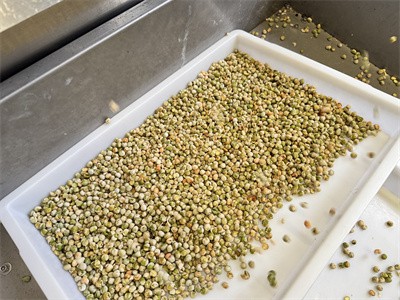
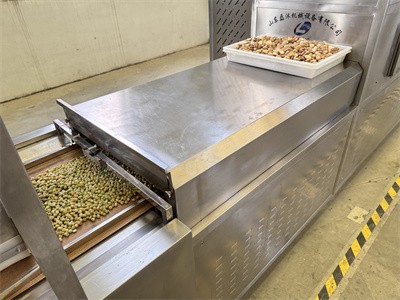
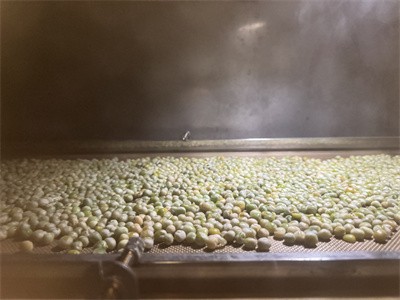
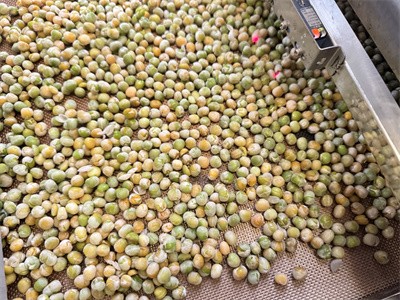
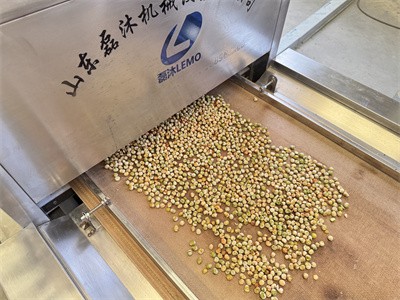
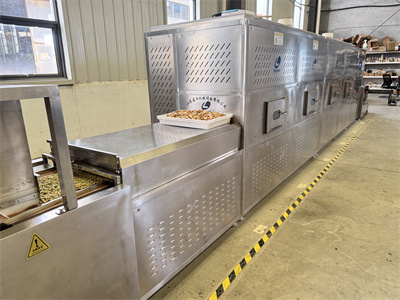
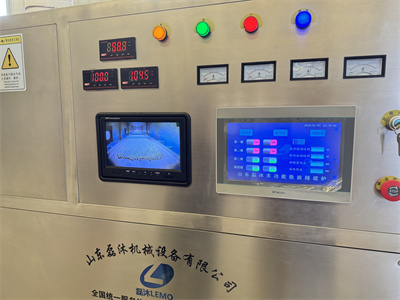
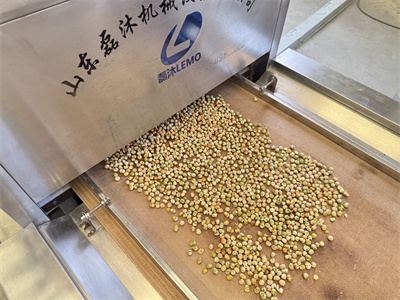
The pre processed green peas are laid flat on a conveyor belt and directly sent into the microwave chamber of the tunnel without the need for grease or preheating. By relying on electromagnetic waves to penetrate the beans, internal water molecules generate heat through friction, and the entire process is transported statically without flipping, reducing the loss of broken beans. By adjusting the speed of the conveyor belt and microwave power to control the degree of dehydration and maturation, the baking process synchronously completes sterilization and insect killing of eggs, achieving maturation and inhibition in one process without oil fume or waste oil production. The production line operates continuously, with processing efficiency higher than the frying process, and is suitable for the production of low-fat, original flavor, lightly flavored and healthy snacks.
Differences in final product effects
1. Taste and texture
Deep fried peas are soaked with oil, resulting in loose and porous interiors with high brittleness, but also high levels of oil.
Microwave baking without oil infiltration, with a hard and crisp texture, evenly cooked inside and outside without any undercooked food, and a refreshing and non greasy texture when chewed; The disadvantage is that under the same seasoning amount, the flavor attachment is weaker than that of fried dishes, and the upper limit of crispness is slightly lower.
2. Color and flavor
Frying high-temperature oil promotes a more complete Maillard reaction, resulting in a golden yellow and dark green finished product with a thick and rich burnt aroma. However, high temperatures can easily mask the sweetness of peas themselves, and long-term storage of oil oxidation can easily produce a rancid taste.
Microwave short-term uniform low-temperature heating maximizes the locking of the original green color and sweet bean aroma of peas, without any oil or fishy smell or hidden dangers of spoilage. The original flavor of the product is clean and refreshing, and the nutrition is well preserved.
summary
The deep frying process focuses on strong aroma and crispy texture, suitable for heavy flavored snacks for the general public; Microwave baking focuses on low-fat health, original flavor and fragrance, with hygienic processing, which meets the current market demand for light health snacks.




 QQ
QQ