Comparison of Electric Heating and Microwave Baking Methods for Nuts
Almond kernels, cashew nuts, and walnut kernels are common nuts in daily snacks and baking processing Raw nuts
About Production Shipment
For conventional customized equipment, we will complete the production in 7-15 days, the equipment could be shipped after your confirmation.
If available, it can be delivered directly.
Service commitment
After the arrival of the equipment, we will assign professional after-sales personnel to go to site for installation, guidance, commissioning, training, etc.
For those equipment cannot be installed on site, we will provide one-to-one video guidance for installation.
After sales service commitment
Within the agreed warranty period, all components of the equipment will be provided free of charge. Provide lifelong technical maintenance and repair services.
Tel:+86 53188965205
Almond kernels, cashew nuts, and walnut kernels are common nuts in daily snacks and baking processing. Raw nuts have a stiff and astringent taste, and are not easy to store. They must be baked and matured to stimulate the aroma of the nuts and remove excess moisture, in order to achieve the standards of crispy, palatable, and durable storage. At present, in nut processing factories and home production, let's compare the differences between electric heating baking and microwave baking processes.
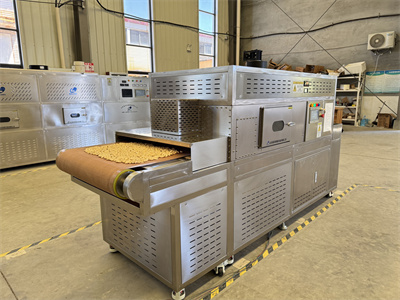
Traditional electric heating baking is the most familiar ripening method for the public, relying on heat conduction and radiation to gradually heat up and ripen nuts from the outside inward. Long term constant temperature baking is required during processing, and the heating rhythm is gentle, which can slowly force out the green and astringent water vapor inside the nut, allowing the surface of the nut to form a natural burnt aroma. The advantage of this process is its strong adaptability. Whether it is mass production or small-scale home production, the finished product has a uniform color and natural appearance, which conforms to the traditional taste perception of the public. But there are also obvious shortcomings, such as long heating time and large temperature difference, which can easily lead to external dryness and internal humidity, and the surface is burnt while the interior is not fully matured.
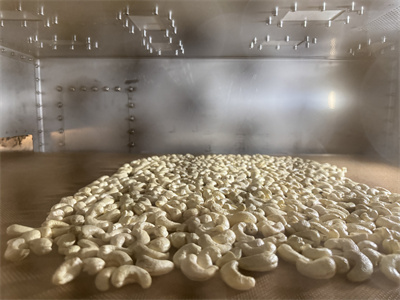
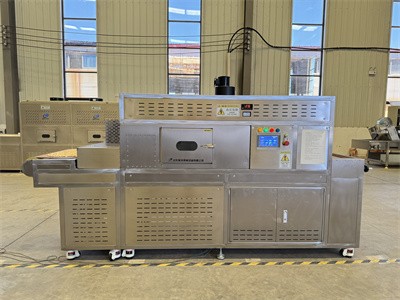
Microwave baking is a targeted rapid ripening process that utilizes high-frequency vibration of water molecules in the material to generate synchronized heat, achieving simultaneous ripening of nuts both inside and outside. No preheating required, fast heating speed, can complete the ripening and dehydration of almond kernels and cashew kernels in just a few minutes, greatly improving processing efficiency. The entire process is evenly heated, avoiding the problem of external burning and internal generation. The low-temperature and short-term processing characteristics can effectively lock in the unsaturated fatty acids and original fruity aroma of nuts. The finished product has high crispness and is not easy to regain moisture after prolonged storage.
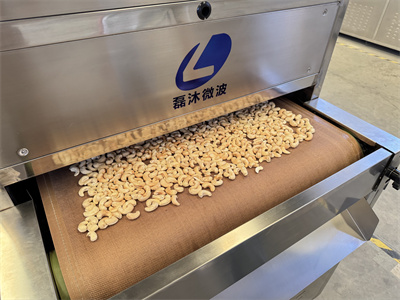
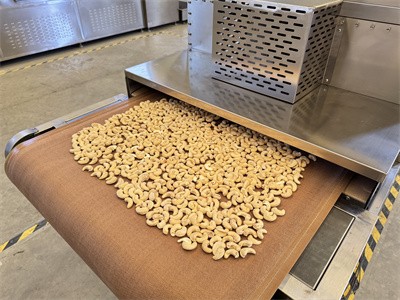
However, microwave technology also has limitations. The finished product has no surface burnt aroma and is suitable for processing original nuts. For flavored nuts that require caramel color and strong roasted aroma, the adaptability is slightly lower than that of electric heating technology. In short, pursuing traditional roasted aroma and diverse seasoning options with electric heating; For those who pursue original flavor locking and continuous rapid production, microwave baking has more advantages.




 QQ
QQ