Baking is the core process of instant oatmeal processing, which directly determines the taste, flavor, and storage quality of oats. Today, let's compare the differences between traditional hot air baking and microwave baking techniques.
Traditional hot air baking is a classic technique in grain processing, with a long history of application and mature technology. The principle is heat conduction heating, which gradually transfers heat from the outside to the inside through the circulation of hot air in the equipment, completing the dehydration, ripening, and aroma enhancement of oatmeal. The core feature of this process is stable heat field, relying on long-term constant temperature baking, which can fully stimulate the burnt aroma of oat surface grains, forming a rich and mellow baking flavor, with a thick and layered aroma, in line with the public's perception of the taste of traditional baked grains. Meanwhile, traditional baking equipment has wide adaptability and low process threshold, making it suitable for large-scale standardized production and the mainstream choice for most classic oat products on the market.
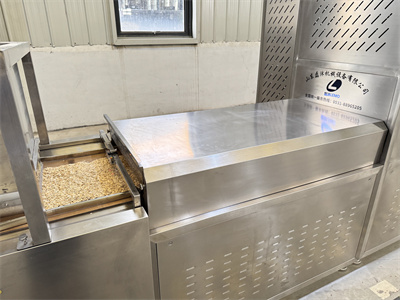
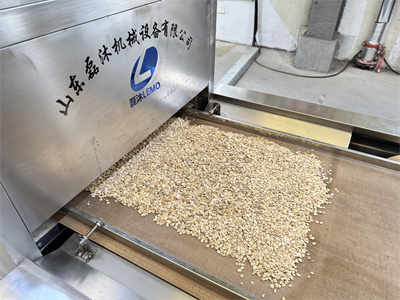
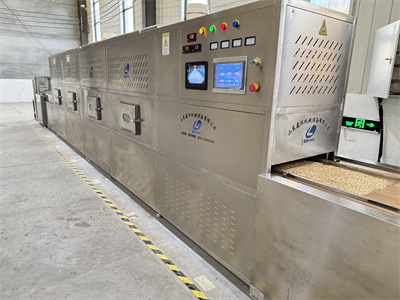
Microwave baking belongs to a new type of physical processing technology, which adopts the principle of medium heating and relies on the high-frequency vibration of water molecules inside the material to generate heat, achieving synchronous and uniform heating of oatmeal inside and outside. Unlike the traditional heating mode from outside to inside, microwave heating does not require a thermal conduction process, has a faster curing speed, and consumes less processing time. Uniform heating method ensures relatively stable oat ripening, high particle integrity, and uniform and regular overall appearance of the finished product.
In terms of taste and nutritional expression, the two techniques present different styles. Traditional hot air baking results in a richer aroma on the surface of oatmeal due to high temperature baking. However, due to the temperature difference between the inside and outside, a small amount of products may have a dry surface and uneven internal ripening. Microwave baking has a balanced temperature throughout the entire process and a short heating time, which can effectively preserve the nutrients in oats. The finished product has a refreshing taste, with a wheat aroma that leans towards the natural grain aroma. The crispness is even, and the shape stability is good after brewing.
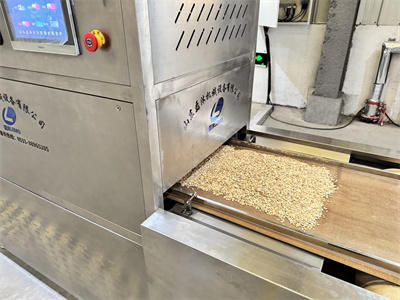
In terms of processing additional effects and storage, each process has its own emphasis. Traditional baking relies on high-temperature and long-lasting baking, which can naturally inhibit some microorganisms. The product has strong flavor recognition and is suitable for consumer groups who prefer rich baking flavors. Microwave baking can simultaneously complete auxiliary sterilization and egg killing treatment while maturing, ensuring uniform dehydration of materials, stable moisture content of finished products, and better moisture resistance and storage resistance. It is suitable for lightweight and long storage period food needs.




 QQ
QQ