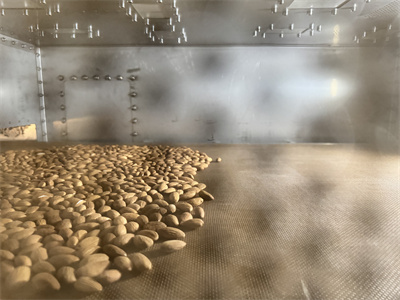
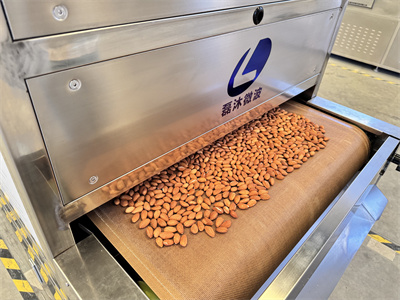
The cooked almonds we usually eat have a light yellow brown color and a strong aroma. They are crispy and crisp when bitten, and some of the kernels may have slight cracks on the skin. How do these changes in appearance and taste occur during microwave heating?
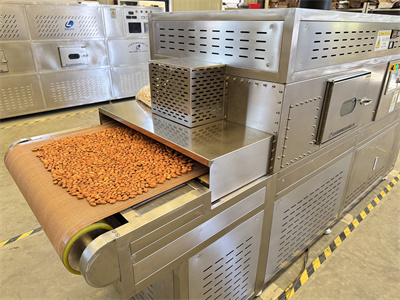
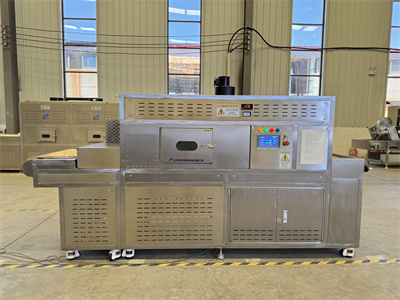
The raw nuts of Batam have a low water content and contain a large amount of oil, protein, and carbohydrates inside. Microwave relies on the absorption of microwave energy by the water molecules of the material itself, and heats up the whole from the inside out, which is different from the traditional baking mode of heating from the outside in.
Firstly, there is a slight cracking of the epidermis, which is a physical change. Raw almond kernels contain a small amount of bound water inside. When microwave heated, the water inside the kernels quickly vaporizes and the internal pressure rapidly increases. The toughness of the outer shell of nuts is limited, and when the internal expansion pressure breaks through the surface, it will form subtle cracks. Compared to traditional hot drying, microwave heating heats up quickly and increases internal pressure rapidly, making it more prone to skin cracking.
Then the fragrance becomes stronger, relying on the Maillard reaction. The reaction process generates volatile flavor compounds such as aldehydes, ketones, and pyrazines, which are the unique nutty aroma of almonds. Raw almonds have almost no strong aroma, only a faint oily taste; After microwave treatment, a large amount of flavor compounds are released, and the aroma will be significantly enhanced.
Finally, the taste becomes crispy. Raw Badan wood is relatively flexible and contains a certain amount of moisture. Microwave heating removes free water and partially bound water from the interior of nuts, causing thermal denaturation of the oil and protein structure inside the nuts. The cell tissue shrinks and becomes dense, and the dehydrated nut tissue becomes crispy. If the water removal is insufficient, the nuts will still be soft; If heated too much, the nuts will become dry, hard, and bitter.
In actual production, it is necessary to control the microwave power and processing time. If the power is too high or the time is too long, it will cause the color to become too dark, burnt, and the nuts to break; If the parameters are insufficient, the color will be light, the aroma will be insufficient, and the taste will be soft. By adjusting the process, cooked almonds with suitable color, aroma, and brittleness can be obtained.




 QQ