Many people in life have the experience that once potato chips, crispy rice cakes, puffed rice cakes, and fried snacks are opened and stored for a long time, they will quickly become soft and fluffy, without a crispy texture, and their taste will be greatly reduced. I don't know if anyone has tried using a microwave to heat for a short period of time, and the originally soft snacks instantly regain their crispness. This is also the reason why microwaves are commonly used in snack crisping, dehumidification, and shaping in food processing and production.
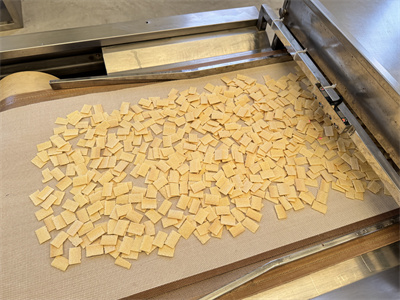
The taste core of fried and puffed snacks comes from the loose and porous internal structure. After high-temperature frying and extrusion puffing, this type of snack forms a large number of tiny voids inside, with a light and fluffy texture. However, the drawbacks of this structure are very obvious. The pores are highly prone to absorbing water vapor from the air. When water seeps into the internal pores of snacks, it softens the starch, fills the hollow structure, and causes the snacks to lose their support, ultimately resulting in softness, non brittleness, and stickiness. This is also the main reason why snacks become damp when opened.
Conventional baking can only slowly dry from the surface towards the center of the snack, and the deep water vapor inside is difficult to completely remove in a short period of time, resulting in low efficiency in crisping.
The advantages of microwave drying are suitable for the needs of snack crisping. It does not require external heat transfer and can allow the water molecules inside the snacks to quickly vibrate at high frequencies, instantly heat up and vaporize. Moisture will quickly evaporate from the deep pores of snacks, emptying the residual water vapor adsorbed inside, and restoring the loose structure that was originally stretched and softened by moisture to its tight and firm state.
The entire process takes a very short time and is uniformly heated, without damaging the puffed tissue structure of snacks like traditional heating, and without excessive baking causing bitterness or hardening. In just over ten seconds, it can solve the problem of moisture and softness, restoring the core taste of crispy and refreshing snacks.
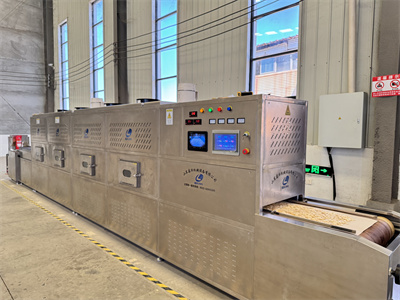
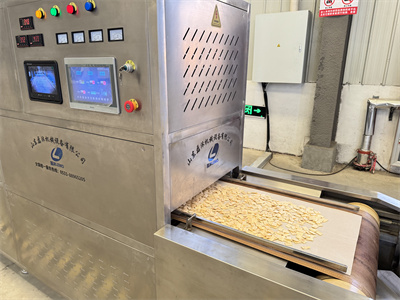
This also explains the processing logic of the food production line: for fried and puffed snacks that are damp and semi-finished, the microwave crisping process can quickly dehumidify and shape them, unify the taste, and retain the original aroma and form of the snacks, greatly improving the qualification rate of finished products and the stability of product taste.




 QQ
QQ